![Best Kids Bikes in Australia [Top 12 List 2025]](https://kidsbikesonline.com.au/wp-content/uploads/2025/09/Best-Kids-Bikes-in-Australia-Top-12-List-2025-e1780399011614-1024x867.jpg)
Bicycle Locks
The best bicycle lock for your child’s bike depends on three things: where it’s left, how long it’s there, and how much weight they’ll carry. Get those right and you’ll buy once.
Our bicycle locks collection covers every age and risk level, from lightweight cable locks for Australian school bike racks to heavy duty bicycle locks for overnight storage. Budget around 10–15% of your bike’s value on a lock. A $250 bike warrants at least a $30–40 lock. Browse the best bicycle lock in Australia below and match the right security to your child’s ride.
Australian-owned and operated · Secure checkout · Fast dispatch · Easy returns ·
Trusted and Loved by Hundreds of Happy Parents and Grandparents!
Bicycle Locks, Bike Accessories
Add to cart$29.00Original price was: $29.00.$25.00Current price is: $25.00.Bicycle Locks, Bike Accessories
Get notified$29.00Original price was: $29.00.$25.00Current price is: $25.00.
Showing all 2 resultsSorted by latest
How to choose the best bicycle lock for your child’s bike
Five lock types. One rule: match your lock to the risk, not the price tag.
Bicycle lock choice comes down to where the bike gets left, how long it’s unsupervised, and how heavy your child will carry it. Get those three right and you’ll buy the right lock first time.
- For school bike racks and short stops: A bicycle cable lock is enough. They’re lightweight, easy for kids to manage, and act as a visible deterrent during a 6-hour school day. Most Australian primary schools have covered bike racks with moderate foot traffic — a cable lock handles this well. Pair it with a bike registration sticker and you’ve covered the basics. The bicycle accessories range includes compatible cycle bike locks sized for kids bike frames.
- For overnight or unsupervised storage: Step up to a heavy duty bicycle lock — specifically a U-lock, chain lock, or quality folding bike lock. These resist bolt cutters, pick attacks, and the 30-second smash-and-grab. Look for locks carrying a Sold Secure rating (Bronze, Silver, or Gold) — independently tested certifications that go beyond marketing claims. For reference, Australian mandatory standards for bicycles set minimum product safety benchmarks — your lock investment should match your bike’s value.
- The one tip most parents skip: Always lock through the frame, not just the wheel. A wheel-only lock leaves thieves a 30-second wheel-swap away from taking the rest. Frame + rear wheel through a fixed rack point is the correct technique every time.
As a practical guide: spend 10–15% of your bike’s value on a lock. A $300 bike warrants a $30–45 lock minimum. A $500 bike deserves a $50–75 Sold Secure-rated model.
Cycle bike locks compared, five types, honest verdicts
Five cut-resistant levels exist across cycle bike locks. Here’s which one earns a place on your child’s bike.
| Lock Type | Security Level | Best For | Approx Weight | Sold Secure Rated |
| U-lock (D-lock) | High | School + overnight | 300–600g | Yes (Silver/Gold available) |
| Cable lock | Low | Short stops, secondary lock | 100–200g | Bronze only |
| Folding bike lock | Medium–High | Daily commute, older kids | 350–500g | Yes (Silver available) |
| Chain lock | High–Very High | Overnight, garage storage | 800g–1.5kg | Yes (Gold available) |
| Combination cable | Low | Young kids, low-risk stops | 100–150g | Rarely |
- U-locks (D-locks): The gold standard for stationary security. Rigid, resistant to leverage attacks, and compact enough for a school bag. Look for hardened steel shackles — cheaper versions use hollow steel that cuts in seconds.
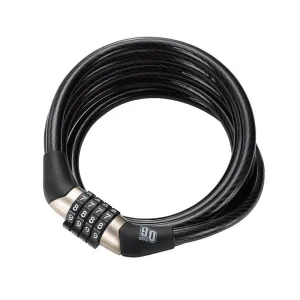
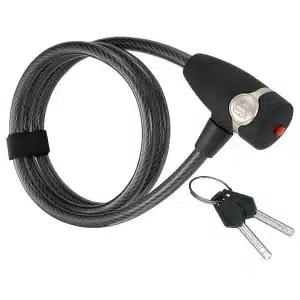
- Cable locks: Flexible, light, and easy for kids to use independently. A bicycle key lock in cable form works well when your child locks up solo at school. Not cut-resistant on their own — use as a secondary lock or for short, supervised stops.
- Folding bike locks: The best middle ground for older kids and commuting teens. A folding bike lock packs smaller than a chain, resists cutting better than a cable, and mounts to the bike frame so kids never forget it. Worth the price step-up for bikes over $300.
- Chain locks with covers: Heavy and unapologetically secure. Overkill for a 20-inch kids bike — but if you’ve invested in a quality 24-inch or 26-inch model stored outdoors in Sydney, Melbourne, or Brisbane, a Sold Secure Gold chain lock is the right call.
- Combination vs key locks: Bicycle key locks suit younger kids — they’ll forget a combination within a fortnight. A 4-digit combination suits teens who ride independently. Either works; the habit of locking matters more than the mechanism. For humid coastal storage, check the lock carries a rust-resistant coating.
Teaching kids to use a bicycle lock, what actually sticks
The best bicycle lock does nothing if your child leaves it hanging on the school fence. The habit matters as much as the hardware.
Raising Children Network recommends making bike safety — including locking — a consistent pre-ride routine from day one. Better Health Victoria reinforces that building safe cycling habits early reduces risk across all aspects of riding, not just theft. Treat locking like a helmet: non-negotiable, every single time.
For younger riders, a simple bicycle cable lock with the key clipped to their bag zip makes independent locking easy. For older riders, a folding bike lock stored in a frame mount removes the “I left it at home” excuse entirely. Kids who carry the lock on the bike almost always use it.
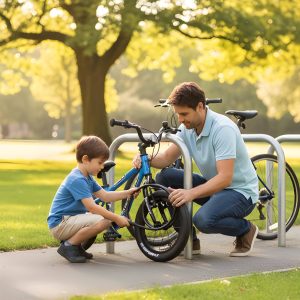
One underrated first step: take your child to the school bike rack before their first day. Show them the locking point, practise locking through the frame, and step back. Kids who’ve rehearsed the routine don’t fumble under peer pressure.
Bike registration adds a second layer. A registered bike, locked correctly, is significantly harder to move on. Combine both habits from the start.
Browse the full Kids Bikes Online range to match your lock to the right bike size. A heavy duty chain on a 12-inch balance bike is as wrong as no lock on a $400 trail bike.
Looking For Adventure and Insider Tips?
Here you’ll find tons of ideas and inspiration to make bike riding or skating with your child, even more fun!
Frequently Asked Questions
For school bike racks, a cable lock paired with a U-lock is the most effective combination. For overnight storage, use a heavy duty bicycle lock with a Sold Secure Silver or Gold rating, and budget 10–15% of the bike's value on the lock.
U-locks with hardened steel shackles are the hardest to cut quickly. For maximum security, use a Sold Secure-rated U-lock through the frame combined with a cable lock through the wheel.
Yes, a bicycle cable lock is adequate for supervised school bike racks during the day. For bikes valued over $300 or higher-risk areas, a folding bike lock or U-lock provides meaningfully better protection.
Try factory defaults first, 0000 and 1234 cover most budget locks. If that fails, contact the manufacturer with proof of purchase; most brands offer a reset service or replacement key.
Why Choose Our Quality Products For Your Child?
Long Lasting – Safety Certified – Perfect Fit – Fun for All Levels – Trusted by Parents

Frequently Asked Questions of Balance Bikes
What age is appropriate for a balance bike?
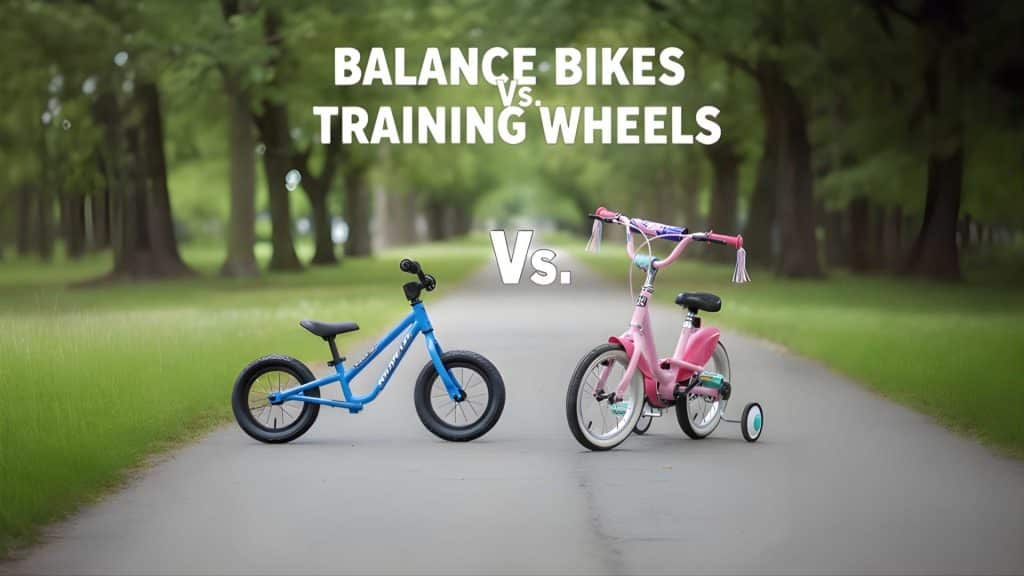
Are balance bikes better than training wheels?
Yes, balance bikes are generally considered more effective than training wheels in teaching children how to balance on a bike, making the transition to a pedal bike smoother and quicker.
How long does it take to learn to ride a balance bike?
What are the benefits of balance bikes?
How do you transition from a balance bike to a pedal bike?
Are balance bikes safe for toddlers?
What features should I look for in a balance bike?
Can balance bikes be used indoors?
While balance bikes are typically designed for outdoor use, they can be used indoors on flat, smooth surfaces with caution to ensure the child’s safety and the protection of indoor surfaces.
How do you teach a child to use a balance bike?
What's the weight limit for balance bikes?
How to choose the best bicycle lock for your child’s bike
Five lock types. One rule: match your lock to the risk, not the price tag.Bicycle lock choice comes down to where the bike gets left, how long it’s unsupervised, and how heavy your child will carry it. Get those three right and you’ll buy the right lock first time.- For school bike racks and short stops: A bicycle cable lock is enough. They’re lightweight, easy for kids to manage, and act as a visible deterrent during a 6-hour school day. Most Australian primary schools have covered bike racks with moderate foot traffic — a cable lock handles this well. Pair it with a bike registration sticker and you’ve covered the basics. The bicycle accessories range includes compatible cycle bike locks sized for kids bike frames.
- For overnight or unsupervised storage: Step up to a heavy duty bicycle lock — specifically a U-lock, chain lock, or quality folding bike lock. These resist bolt cutters, pick attacks, and the 30-second smash-and-grab. Look for locks carrying a Sold Secure rating (Bronze, Silver, or Gold) — independently tested certifications that go beyond marketing claims. For reference, Australian mandatory standards for bicycles set minimum product safety benchmarks — your lock investment should match your bike’s value.
- The one tip most parents skip: Always lock through the frame, not just the wheel. A wheel-only lock leaves thieves a 30-second wheel-swap away from taking the rest. Frame + rear wheel through a fixed rack point is the correct technique every time.
Cycle bike locks compared, five types, honest verdicts
Five cut-resistant levels exist across cycle bike locks. Here’s which one earns a place on your child’s bike.| Lock Type | Security Level | Best For | Approx Weight | Sold Secure Rated |
| U-lock (D-lock) | High | School + overnight | 300–600g | Yes (Silver/Gold available) |
| Cable lock | Low | Short stops, secondary lock | 100–200g | Bronze only |
| Folding bike lock | Medium–High | Daily commute, older kids | 350–500g | Yes (Silver available) |
| Chain lock | High–Very High | Overnight, garage storage | 800g–1.5kg | Yes (Gold available) |
| Combination cable | Low | Young kids, low-risk stops | 100–150g | Rarely |
- U-locks (D-locks): The gold standard for stationary security. Rigid, resistant to leverage attacks, and compact enough for a school bag. Look for hardened steel shackles — cheaper versions use hollow steel that cuts in seconds.
- Cable locks: Flexible, light, and easy for kids to use independently. A bicycle key lock in cable form works well when your child locks up solo at school. Not cut-resistant on their own — use as a secondary lock or for short, supervised stops.
- Folding bike locks: The best middle ground for older kids and commuting teens. A folding bike lock packs smaller than a chain, resists cutting better than a cable, and mounts to the bike frame so kids never forget it. Worth the price step-up for bikes over $300.
- Chain locks with covers: Heavy and unapologetically secure. Overkill for a 20-inch kids bike — but if you’ve invested in a quality 24-inch or 26-inch model stored outdoors in Sydney, Melbourne, or Brisbane, a Sold Secure Gold chain lock is the right call.
- Combination vs key locks: Bicycle key locks suit younger kids — they’ll forget a combination within a fortnight. A 4-digit combination suits teens who ride independently. Either works; the habit of locking matters more than the mechanism. For humid coastal storage, check the lock carries a rust-resistant coating.