![Best Kids Bikes in Australia [Top 12 List 2025]](https://kidsbikesonline.com.au/wp-content/uploads/2025/09/Best-Kids-Bikes-in-Australia-Top-12-List-2025-e1780399011614-1024x867.jpg)
Kids Mountain Bikes
A kids mountain bike is a purpose-built off-road bike for children, not a scaled-down toy. It has front suspension, disc brakes, knobbly wide tyres, and frame geometry designed for real trail control.
Every kids mountain bike in this collection handles the terrain Australian kids actually want to ride: singletrack, fire roads, pump tracks, and gravel. Available in 20 inch and 24 inch wheel sizes for riders from (9 years upward.
Australian-owned and operated · Secure checkout · Fast dispatch· Easy returns
Trusted and Loved by Hundreds of Happy Parents and Grandparents!
Kids Mountain Bikes, Kids Bikes
$1,895.95 – $1,995.95Price range: $1,895.95 through $1,995.95Get notified This product has multiple variants. The options may be chosen on the product page
Showing the single result
Kids Mountain Bike Size Guide — Which Wheel Size Fits your child?
Use rider height and inseam together. Age gives a rough guide but children grow at different rates, height is more reliable.
| Wheel size | Rider age | Rider height | Inseam | Best terrain |
| 20 inch | 6–10 yrs | 115–135 cm | ∼50–60 cm | Gravel, fire roads, XC trails |
| 24 inch | 9–13 yrs | 130–155 cm | ∼58–71 cm | Singletrack, pump tracks, descents |
Inseam = inside leg from crotch to floor (shoes on). If your child sits between sizes, measure inseam and choose based on riding confidence — a smaller bike is always safer than one they have to grow into.
1 – 20 inch kids mountain bikes — ages 6 to 10
A 20 inch kids mountain bike suits riders standing 115–135 cm tall. At this size, good models include front suspension forks with at least 50 mm of usable travel and mechanical disc brakes.
Choose a 20 inch MTB for cross-country trails, gravel paths, and pump tracks. Brands like Polygon, Mongoose, and Apollo offer quality 20 inch kids MTB options at entry-level pricing.
2 – 24 inch kids mountain bikes — ages 9 to 13
A 24 inch youth mountain bike suits riders standing 130–155 cm. This is where component quality matters most — these children ride harder, faster, and on more technical terrain.
A quality 24 inch kids mountain bike uses the same drivetrain and brake standard as an adult entry-level trail bike. Look for 7 to 8 speed gearing and hydraulic disc brakes on performance models.
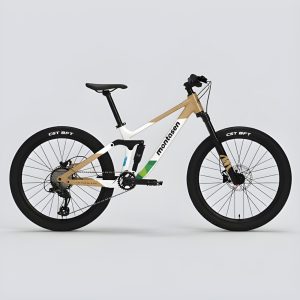
For experienced young riders on technical descents, a kids full suspension mountain bike is available at the 24 inch wheel size. Full suspension suits rooted, rocky, or fast downhill terrain.
What separates a real kids mountain bike from a cheap imitation
The market is full of bikes labelled mountain bikes that cannot handle real trails. Here is what to check before you buy.
1 – Suspension fork
A quality kids MTB fork uses a coil or air spring that actually absorbs trail impacts. A budget fork uses a spring-and-elastomer setup that adds weight without real travel.
Look for at least 50 mm of usable suspension travel. Anything less performs like a rigid fork on rough ground.
2 – Brakes
A kids mountain bike should have mechanical disc brakes at minimum. Disc brakes work in wet, muddy, and dry conditions. Hydraulic disc brakes offer better modulation on premium youth MTB models.
V-brakes are acceptable for light use on paths and grass. They lose performance in mud and rain, exactly the conditions a trail bike encounters.
3 – Tyres
A genuine kids mountain bike runs tyres 2.0 to 2.4 inches wide with knobbly tread. Narrower tyres on loose or wet ground increase the risk of front wheel washout significantly.
4 – Drivetrain
Single-speed is fine for flat fire roads and gravel. A 7 or 8 speed drivetrain suits hilly singletrack and pump tracks where gear range makes a real difference.
Skip 21-speed setups on kids bikes. Multiple front chainrings add complexity that young riders rarely use and that adds maintenance burden for parents.
5 – Frame weight
A bike should weigh no more than 30% of your child’s body weight. Heavy bikes are harder to control, more tiring to ride, and reduce confidence.
| Wheel size | Typical bike weight | Rider weight range | Rule |
| 20 inch | 8–11 kg | 25–40 kg | Bike = max 30% of rider weight |
| 24 inch | 10–14 kg | 32–50 kg | Bike = max 30% of rider weight |
Choose an alloy frame over steel for a lighter, more manageable ride. Quality alloy kids MTBs keep weight in the 8–12 kg range for 20 inch, and 10–14 kg for 24 inch.
How to fit a kids mountain bike correctly
Getting the fit right is more important than the spec. A bike that is too big is unsafe. A bike that is too small holds a child back.
Step 1 — Measure inseam
Have your child stand barefoot against a wall. Place a hardcover book between their legs with the spine up. Mark the wall at the top of the book. Measure from that mark to the floor. That is their inseam.
Step 2 — Check standover clearance
Your child should stand flat-footed over the top tube with 3–5 cm of clearance between the tube and their body. No clearance means the frame is too large.
Step 3 — Check saddle height
When seated, your child’s feet should be flat (or nearly flat) on the ground with a slight bend in the knee. They should reach the handlebars without fully extending their arms.
Step 4 — Check brake reach
Your child should grip both brake levers comfortably with fingers curled. Short-reach brake levers are standard on quality kids MTBs. If levers require a full adult grip, the bike is too large.
Kids dual suspension and full suspension mountain bikes
A kids dual suspension mountain bike adds a rear shock absorber to the front fork. Both wheels absorb trail impacts, significantly smoother on technical, rocky, or rooted terrain.
Dual suspension suits experienced young riders tackling proper descents. For gravel fire roads and flat singletrack, a hardtail is lighter and more efficient.
Kids full suspension mountain bikes are available at the 24 inch wheel size. They are the right choice for trail-focused riders who ride frequently and want the performance step up.
Helmets and Safety for Mountain Bike Riders in Australia
Helmets are compulsory in Australia for all riders, including mountain bike riders. This applies in every state and territory. For specific helmet requirements and riding safety advice, Better Health Victoria is an authoritative reference for Australian parents.
Use this checklist before every ride:
- Correctly fitted helmet — snug, level, with a two-finger gap above the eyebrow
- Closed-toe shoes — sandals and bare feet are not safe on a balance bike
- Knee pads and elbow guards for early riders still finding their balance
- Appropriate surface — smooth paths, footpaths, or grass for beginners
See our full bike accessories range for toddler helmets, knee pads, and elbow guards.
Looking For Adventure and Insider Tips?
Here you’ll find tons of ideas and inspiration to make bike riding or skating with your child, even more fun!
Frequently Asked Questions
Why Choose Our Quality Products For Your Child?
Long Lasting – Safety Certified – Perfect Fit – Fun for All Levels – Trusted by Parents

Frequently Asked Questions of Balance Bikes
What age is appropriate for a balance bike?
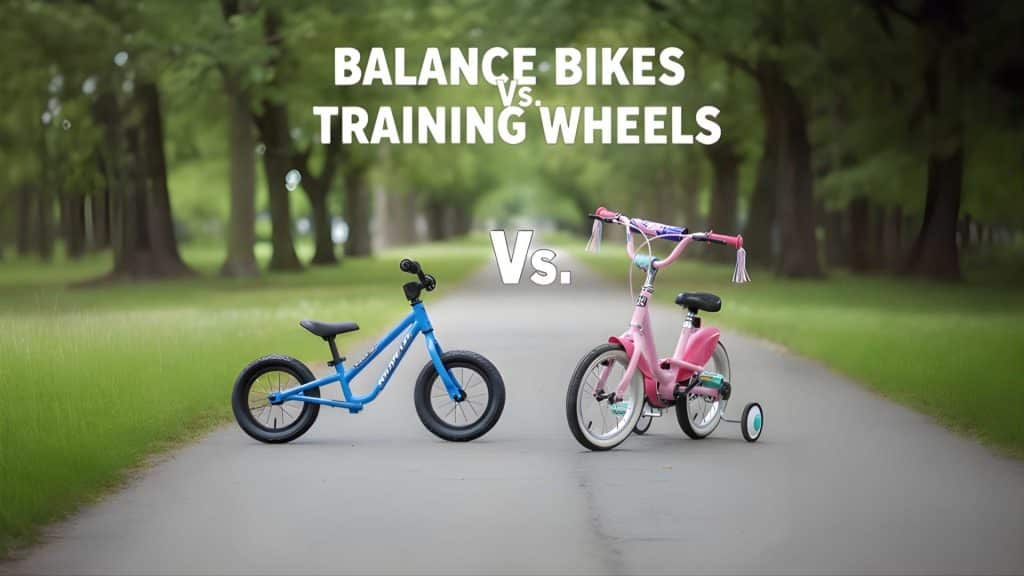
Are balance bikes better than training wheels?
Yes, balance bikes are generally considered more effective than training wheels in teaching children how to balance on a bike, making the transition to a pedal bike smoother and quicker.
How long does it take to learn to ride a balance bike?
What are the benefits of balance bikes?
How do you transition from a balance bike to a pedal bike?
Are balance bikes safe for toddlers?
What features should I look for in a balance bike?
Can balance bikes be used indoors?
While balance bikes are typically designed for outdoor use, they can be used indoors on flat, smooth surfaces with caution to ensure the child’s safety and the protection of indoor surfaces.
How do you teach a child to use a balance bike?
What's the weight limit for balance bikes?
Kids Mountain Bike Size Guide — Which Wheel Size Fits your child?
Use rider height and inseam together. Age gives a rough guide but children grow at different rates, height is more reliable.| Wheel size | Rider age | Rider height | Inseam | Best terrain |
| 20 inch | 6–10 yrs | 115–135 cm | ∼50–60 cm | Gravel, fire roads, XC trails |
| 24 inch | 9–13 yrs | 130–155 cm | ∼58–71 cm | Singletrack, pump tracks, descents |
1 – 20 inch kids mountain bikes — ages 6 to 10
A 20 inch kids mountain bike suits riders standing 115–135 cm tall. At this size, good models include front suspension forks with at least 50 mm of usable travel and mechanical disc brakes.Choose a 20 inch MTB for cross-country trails, gravel paths, and pump tracks. Brands like Polygon, Mongoose, and Apollo offer quality 20 inch kids MTB options at entry-level pricing.2 – 24 inch kids mountain bikes — ages 9 to 13
A 24 inch youth mountain bike suits riders standing 130–155 cm. This is where component quality matters most — these children ride harder, faster, and on more technical terrain.A quality 24 inch kids mountain bike uses the same drivetrain and brake standard as an adult entry-level trail bike. Look for 7 to 8 speed gearing and hydraulic disc brakes on performance models.For experienced young riders on technical descents, a kids full suspension mountain bike is available at the 24 inch wheel size. Full suspension suits rooted, rocky, or fast downhill terrain.What separates a real kids mountain bike from a cheap imitation
The market is full of bikes labelled mountain bikes that cannot handle real trails. Here is what to check before you buy.1 – Suspension fork
A quality kids MTB fork uses a coil or air spring that actually absorbs trail impacts. A budget fork uses a spring-and-elastomer setup that adds weight without real travel.Look for at least 50 mm of usable suspension travel. Anything less performs like a rigid fork on rough ground.2 – Brakes
A kids mountain bike should have mechanical disc brakes at minimum. Disc brakes work in wet, muddy, and dry conditions. Hydraulic disc brakes offer better modulation on premium youth MTB models.V-brakes are acceptable for light use on paths and grass. They lose performance in mud and rain, exactly the conditions a trail bike encounters.3 – Tyres
A genuine kids mountain bike runs tyres 2.0 to 2.4 inches wide with knobbly tread. Narrower tyres on loose or wet ground increase the risk of front wheel washout significantly.4 – Drivetrain
Single-speed is fine for flat fire roads and gravel. A 7 or 8 speed drivetrain suits hilly singletrack and pump tracks where gear range makes a real difference.Skip 21-speed setups on kids bikes. Multiple front chainrings add complexity that young riders rarely use and that adds maintenance burden for parents.5 – Frame weight
A bike should weigh no more than 30% of your child’s body weight. Heavy bikes are harder to control, more tiring to ride, and reduce confidence.| Wheel size | Typical bike weight | Rider weight range | Rule |
| 20 inch | 8–11 kg | 25–40 kg | Bike = max 30% of rider weight |
| 24 inch | 10–14 kg | 32–50 kg | Bike = max 30% of rider weight |
Step 1 — Measure inseam
Have your child stand barefoot against a wall. Place a hardcover book between their legs with the spine up. Mark the wall at the top of the book. Measure from that mark to the floor. That is their inseam.Step 2 — Check standover clearance
Your child should stand flat-footed over the top tube with 3–5 cm of clearance between the tube and their body. No clearance means the frame is too large.Step 3 — Check saddle height
When seated, your child’s feet should be flat (or nearly flat) on the ground with a slight bend in the knee. They should reach the handlebars without fully extending their arms.Step 4 — Check brake reach
Your child should grip both brake levers comfortably with fingers curled. Short-reach brake levers are standard on quality kids MTBs. If levers require a full adult grip, the bike is too large.Kids dual suspension and full suspension mountain bikes
A kids dual suspension mountain bike adds a rear shock absorber to the front fork. Both wheels absorb trail impacts, significantly smoother on technical, rocky, or rooted terrain.Dual suspension suits experienced young riders tackling proper descents. For gravel fire roads and flat singletrack, a hardtail is lighter and more efficient.Kids full suspension mountain bikes are available at the 24 inch wheel size. They are the right choice for trail-focused riders who ride frequently and want the performance step up.Helmets and Safety for Mountain Bike Riders in Australia
Helmets are compulsory in Australia for all riders, including mountain bike riders. This applies in every state and territory. For specific helmet requirements and riding safety advice, Better Health Victoria is an authoritative reference for Australian parents.Use this checklist before every ride:- Correctly fitted helmet — snug, level, with a two-finger gap above the eyebrow
- Closed-toe shoes — sandals and bare feet are not safe on a balance bike
- Knee pads and elbow guards for early riders still finding their balance
- Appropriate surface — smooth paths, footpaths, or grass for beginners