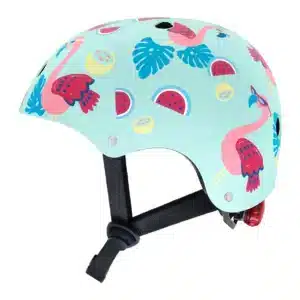
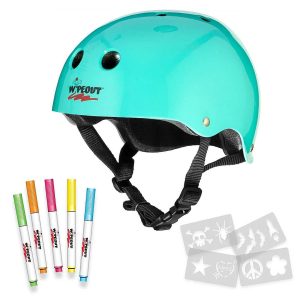
Toddler Helmets (2-5yrs)

Not all toddler helmets are built equal. The ones in this collection are certified to Australia’s mandatory helmet standard, sized for heads from 44–54 cm, and light enough that little ones actually keep them on.

Whether you’re buying a first helmet for a cautious two-year-old or upgrading a fearless four-year-old who needs full-face coverage, you’ll find the right fit here. No fashion-only helmets. No uncertified imports. Just genuinely protective gear that works for real Australian kids.

Australian-owned and operated · Secure checkout · Fast dispatch · Easy returns ·

Trusted and Loved by Hundreds of Happy Parents and Grandparents!

Showing all 3 resultsSorted by latest

Why the Right Toddler Helmet is the only Non-Negotiable

Most toddler crashes happen slowly. A wobble off the footpath, a driveway tumble, a kerb that came out of nowhere. Speed isn’t the danger, the ground is. A properly fitted toddler helmet absorbs that impact before it reaches a still-developing skull.

Every helmet in this collection complies with Australia’s Consumer Goods (Bicycle Helmets) Safety Standard 2024 — the mandatory federal standard that replaced the old single-standard requirement from March 2024. Compliant helmets meet at least one of six recognised standards, including AS/NZS 2063:2020 and EN 1078:2012+A1:2012. Look for the compliance sticker inside the helmet. No sticker means no certification, don’t buy it.

The best toddler helmet in Australia is the one your child will actually wear. Fit, weight, and ventilation all determine whether a toddler accepts a helmet or pulls it off the second you look away.

Don’t buy second-hand. A toddler helmet that’s been in a crash looks identical to one that hasn’t. The EPS foam inside crushes once, after that it’s compromised. You cannot verify a used helmet’s crash history. Buy new, every time.

Open-face vs Full-Face Toddler Helmets 

Open-face helmets suit most toddlers on balance bikes, small pedal bikes, and ride-on toys. They’re lighter, cooler in Australian summers, and easier for toddlers aged 1–3 to tolerate. For most early riders, start here.

Full-face toddler helmets add a chin and jaw guard, protection for forward falls where the face contacts the ground first. They make sense once your child is picking up real speed, typically from age three or four on a 12-inch pedal bike. If your four-year-old is bombing down the driveway or starting their first pump track sessions, a toddler full-face helmet is worth considering. It weighs more, so factor that in for younger or reluctant wearers.

FeatureOpen-FaceFull-Face
Best age range1–4 years3–5+ years
Chin/jaw protectionNoYes
WeightLighter (200–320 g)Heavier (350–500 g)
Best useBalance bikes, low-speed pedal bikesHigher-speed pedal bikes, pump track
VentilationBetterReduced
Price range$35–$80$60–$120

Do toddler helmets need MIPS?

MIPS stands for Multi-directional Impact Protection System. It’s a thin low-friction layer inside the helmet shell that slides 10–15 mm in all directions on angled impact. Most toddler crashes involve an angled hit, not straight-down — so MIPS reduces the rotational force transmitted to the brain.

Standard certified helmets protect against direct linear impact. MIPS adds rotational protection on top of that. It’s not mandatory, but it adds meaningful safety for roughly $15–$25 more at the mid-range price point. If your budget allows it, choose MIPS. If not, a correctly fitted certified helmet without MIPS is still far safer than no helmet.

What the fit adjustment system actually does

The dial-fit or ratchet system at the back of a toddler helmet isn’t just a convenience feature. It prevents the helmet from shifting during impact. A loose helmet rotates on impact, exposing the forehead or back of the skull to direct contact.

Tighten the rear dial until the helmet sits flat and firm, then adjust the chin strap so two fingers fit between strap and chin — snug but not choking. Check the fit every few months. Toddler heads grow fast, and what is fitted in winter may be too loose by summer.

What Australian Parents Need to Know Before They Buy

Helmet laws and fines by state

Helmet use is mandatory for all cyclists in every Australian state and territory, including toddlers on balance bikes. There are no age exemptions. Fines for riding without an approved helmet vary by state:

State / TerritoryHelmet Fine (approx.)
NSW$344
VIC~$227
QLD~$143
SA~$205 (inc. victims levy)
TAS$344
WA$50
ACT~$121–$146
NT$25

Fine amounts are indexed and may increase. Verify current amounts with your state transport authority.

The helmet must comply with Australia’s mandatory standard. From 22 September 2025, all helmets sold in Australia must meet the Consumer Goods (Bicycle Helmets) Safety Standard 2024. Compliant helmets carry a certification sticker inside the shell — check for it before purchasing.

For further guidance on child helmet safety and fitting, the Better Health Channel (Vic) and raisingchildren.net.au both provide state-reviewed advice for Australian parents.

When to replace a toddler helmet

Replace a toddler helmet immediately after any crash — even a minor one with no visible damage. The EPS (expanded polystyrene) liner is designed to absorb one major impact. Once it has, its protective capacity is gone regardless of how the outside looks. You cannot see internal foam compression.

Without a crash, most manufacturers and safety bodies recommend replacing helmets every three to five years. UV exposure, sweat, and general wear degrade both the shell and the foam over time. As raisingchildren.net.au notes, helmets should be replaced if they’ve been in a crash or are more than a few years old.

What features actually matter

Skip helmets marketed on looks alone. Focus on these:

  • EPS liner — the energy-absorbing foam inside the shell; must be present in all compliant helmets
  • Rear adjustment dial — keeps fit consistent as your toddler’s head grows; non-negotiable
  • Quick-release chin buckle — you’ll clip and unclip this dozens of times per week; magnetic or pinch-free designs save time and tears
  • Ventilation — toddlers overheat quickly; look for at least 8–12 vents for Australian summer riding
  • Weight — under 300 g for ages 1–3; under 350 g for ages 4–5; lighter helmets are worn more consistently
  • MIPS — worth adding at mid-range price points for enhanced rotational impact protection

Helmets and first bikes go together

Buying a first balance bike or 12-inch pedal bike too? The helmet comes first, always. Browse our bike accessories collection to round out the kit with knee pads and gloves, and check our shipping and delivery policy to understand how we dispatch across Australia. We stock helmets and bikes together so you can kit your child out in one order.

Frequently Asked Questions

In Australia, children must wear an approved helmet every time they ride a bike, including balance bikes. There is no minimum age exemption. As soon as your toddler climbs on any wheeled ride-on toy designed for riding, a compliant helmet is legally required. This applies on driveways, footpaths, bike paths, and roads.

Most two-year-olds have a head circumference between 47 cm and 51 cm. Always measure with a soft tape measure around the widest point of the head, approximately 2 cm above the eyebrows. Do not select a helmet by age, children of the same age can differ by 4–5 cm in head circumference.

Yes. All bicycle helmets sold in Australia must comply with the Consumer Goods (Bicycle Helmets) Safety Standard 2024. Compliant helmets meet at least one of six approved standards including AS/NZS 2063:2020, EN 1078:2012+A1:2012, or US CPSC standards. Look for the certification sticker inside the shell. An imported helmet without this certification is non-compliant and illegal to sell in Australia.

A correctly fitted toddler helmet sits level on the head, two finger-widths above the eyebrows. It should not rock forward, backward, or side to side. The rear adjustment dial should hold the helmet firm without pinching. The chin strap should allow two fingers to fit between strap and chin, secure, but not tight enough to cause discomfort. Recheck the fit every few months as your toddler grows.

Replace immediately after any crash, even a minor one with no visible damage. The internal EPS foam is compromised after one significant impact. Without a crash, replace every three to five years. UV exposure, heat, and wear degrade both the outer shell and the foam liner over time. Never buy a second-hand toddler helmet. You cannot verify its crash history.

Why Choose Our Quality Products For Your Child?

Long Lasting – Safety Certified – Perfect Fit – Fun for All Levels – Trusted by Parents

Why Choose Our Quality Products For Your Child?

Frequently Asked Questions of Balance Bikes

What age is appropriate for a balance bike?
The appropriate age for a balance bike is typically between 2 to 8 years old, as children in this age range are usually developing the motor skills needed to ride a balance bike effectively.

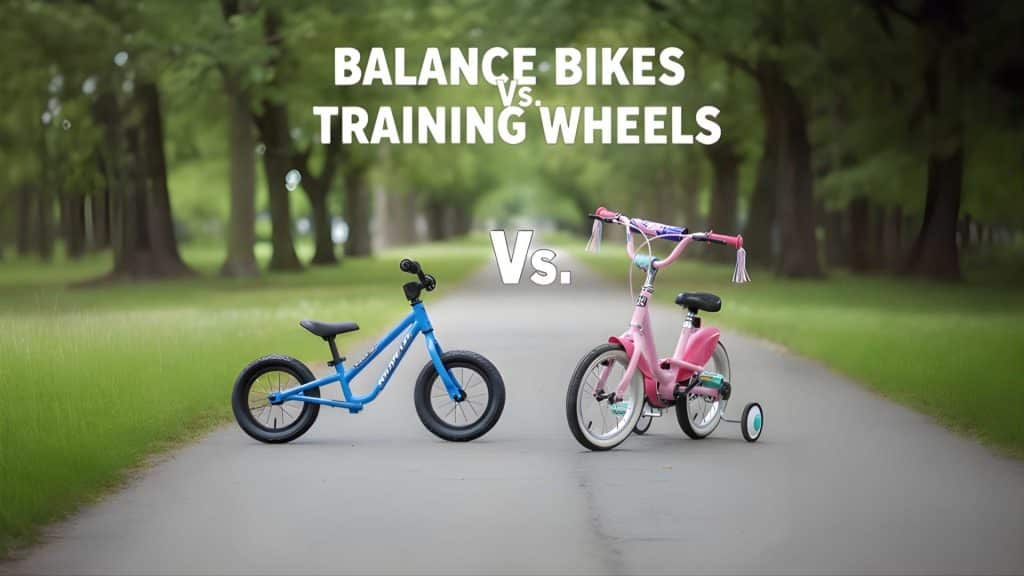
Yes, balance bikes are generally considered more effective than training wheels in teaching children how to balance on a bike, making the transition to a pedal bike smoother and quicker.

Most children can learn to ride a balance bike within a few days to a few weeks, depending on their individual abilities and confidence level.
The benefits of balance bikes include improving children’s balance, coordination, and motor skills, as well as fostering a sense of independence and confidence in their riding abilities.
To transition from a balance bike to a pedal bike, encourage your child to practice coasting and balancing without their feet touching the ground, which simulates the feeling of riding a pedal bike.
Yes, balance bikes are safe for toddlers when used under proper supervision and in a suitable environment that is free of potential hazards.
Look for features like adjustable seat and handlebar height, lightweight frame for easy maneuverability, air filled tyres, and a hand brakes for added safety when choosing a balance bike.

While balance bikes are typically designed for outdoor use, they can be used indoors on flat, smooth surfaces with caution to ensure the child’s safety and the protection of indoor surfaces.

To teach a child to use a balance bike, start by demonstrating how to sit and walk with the bike, encouraging them to push off with their feet and gradually progress to coasting and balancing while steering.
The weight limit for balance bikes varies by model, but most can generally support up to around 30kgs to 50kgs, so be sure to check the manufacturer’s specifications for the specific weight limit of the balance bike you choose.

Why the Right Toddler Helmet is the only Non-Negotiable

Most toddler crashes happen slowly. A wobble off the footpath, a driveway tumble, a kerb that came out of nowhere. Speed isn’t the danger, the ground is. A properly fitted toddler helmet absorbs that impact before it reaches a still-developing skull.Every helmet in this collection complies with Australia’s Consumer Goods (Bicycle Helmets) Safety Standard 2024 — the mandatory federal standard that replaced the old single-standard requirement from March 2024. Compliant helmets meet at least one of six recognised standards, including AS/NZS 2063:2020 and EN 1078:2012+A1:2012. Look for the compliance sticker inside the helmet. No sticker means no certification, don’t buy it.The best toddler helmet in Australia is the one your child will actually wear. Fit, weight, and ventilation all determine whether a toddler accepts a helmet or pulls it off the second you look away.Don’t buy second-hand. A toddler helmet that’s been in a crash looks identical to one that hasn’t. The EPS foam inside crushes once, after that it’s compromised. You cannot verify a used helmet’s crash history. Buy new, every time.

Open-face vs Full-Face Toddler Helmets 

Open-face helmets suit most toddlers on balance bikes, small pedal bikes, and ride-on toys. They’re lighter, cooler in Australian summers, and easier for toddlers aged 1–3 to tolerate. For most early riders, start here.Full-face toddler helmets add a chin and jaw guard, protection for forward falls where the face contacts the ground first. They make sense once your child is picking up real speed, typically from age three or four on a 12-inch pedal bike. If your four-year-old is bombing down the driveway or starting their first pump track sessions, a toddler full-face helmet is worth considering. It weighs more, so factor that in for younger or reluctant wearers.
FeatureOpen-FaceFull-Face
Best age range1–4 years3–5+ years
Chin/jaw protectionNoYes
WeightLighter (200–320 g)Heavier (350–500 g)
Best useBalance bikes, low-speed pedal bikesHigher-speed pedal bikes, pump track
VentilationBetterReduced
Price range$35–$80$60–$120

Do toddler helmets need MIPS?

MIPS stands for Multi-directional Impact Protection System. It’s a thin low-friction layer inside the helmet shell that slides 10–15 mm in all directions on angled impact. Most toddler crashes involve an angled hit, not straight-down — so MIPS reduces the rotational force transmitted to the brain.Standard certified helmets protect against direct linear impact. MIPS adds rotational protection on top of that. It’s not mandatory, but it adds meaningful safety for roughly $15–$25 more at the mid-range price point. If your budget allows it, choose MIPS. If not, a correctly fitted certified helmet without MIPS is still far safer than no helmet.

What the fit adjustment system actually does

The dial-fit or ratchet system at the back of a toddler helmet isn’t just a convenience feature. It prevents the helmet from shifting during impact. A loose helmet rotates on impact, exposing the forehead or back of the skull to direct contact.Tighten the rear dial until the helmet sits flat and firm, then adjust the chin strap so two fingers fit between strap and chin — snug but not choking. Check the fit every few months. Toddler heads grow fast, and what is fitted in winter may be too loose by summer.

What Australian Parents Need to Know Before They Buy

Helmet laws and fines by state

Helmet use is mandatory for all cyclists in every Australian state and territory, including toddlers on balance bikes. There are no age exemptions. Fines for riding without an approved helmet vary by state:
State / TerritoryHelmet Fine (approx.)
NSW$344
VIC~$227
QLD~$143
SA~$205 (inc. victims levy)
TAS$344
WA$50
ACT~$121–$146
NT$25
Fine amounts are indexed and may increase. Verify current amounts with your state transport authority.The helmet must comply with Australia’s mandatory standard. From 22 September 2025, all helmets sold in Australia must meet the Consumer Goods (Bicycle Helmets) Safety Standard 2024. Compliant helmets carry a certification sticker inside the shell — check for it before purchasing.For further guidance on child helmet safety and fitting, the Better Health Channel (Vic) and raisingchildren.net.au both provide state-reviewed advice for Australian parents.

When to replace a toddler helmet

Replace a toddler helmet immediately after any crash — even a minor one with no visible damage. The EPS (expanded polystyrene) liner is designed to absorb one major impact. Once it has, its protective capacity is gone regardless of how the outside looks. You cannot see internal foam compression.Without a crash, most manufacturers and safety bodies recommend replacing helmets every three to five years. UV exposure, sweat, and general wear degrade both the shell and the foam over time. As raisingchildren.net.au notes, helmets should be replaced if they’ve been in a crash or are more than a few years old.

What features actually matter

Skip helmets marketed on looks alone. Focus on these:
  • EPS liner — the energy-absorbing foam inside the shell; must be present in all compliant helmets
  • Rear adjustment dial — keeps fit consistent as your toddler’s head grows; non-negotiable
  • Quick-release chin buckle — you’ll clip and unclip this dozens of times per week; magnetic or pinch-free designs save time and tears
  • Ventilation — toddlers overheat quickly; look for at least 8–12 vents for Australian summer riding
  • Weight — under 300 g for ages 1–3; under 350 g for ages 4–5; lighter helmets are worn more consistently
  • MIPS — worth adding at mid-range price points for enhanced rotational impact protection

Helmets and first bikes go together

Buying a first balance bike or 12-inch pedal bike too? The helmet comes first, always. Browse our bike accessories collection to round out the kit with knee pads and gloves, and check our shipping and delivery policy to understand how we dispatch across Australia. We stock helmets and bikes together so you can kit your child out in one order.
Read More >

Join the Kids Bikes Online Community to get $10 off orders over $99.00aud