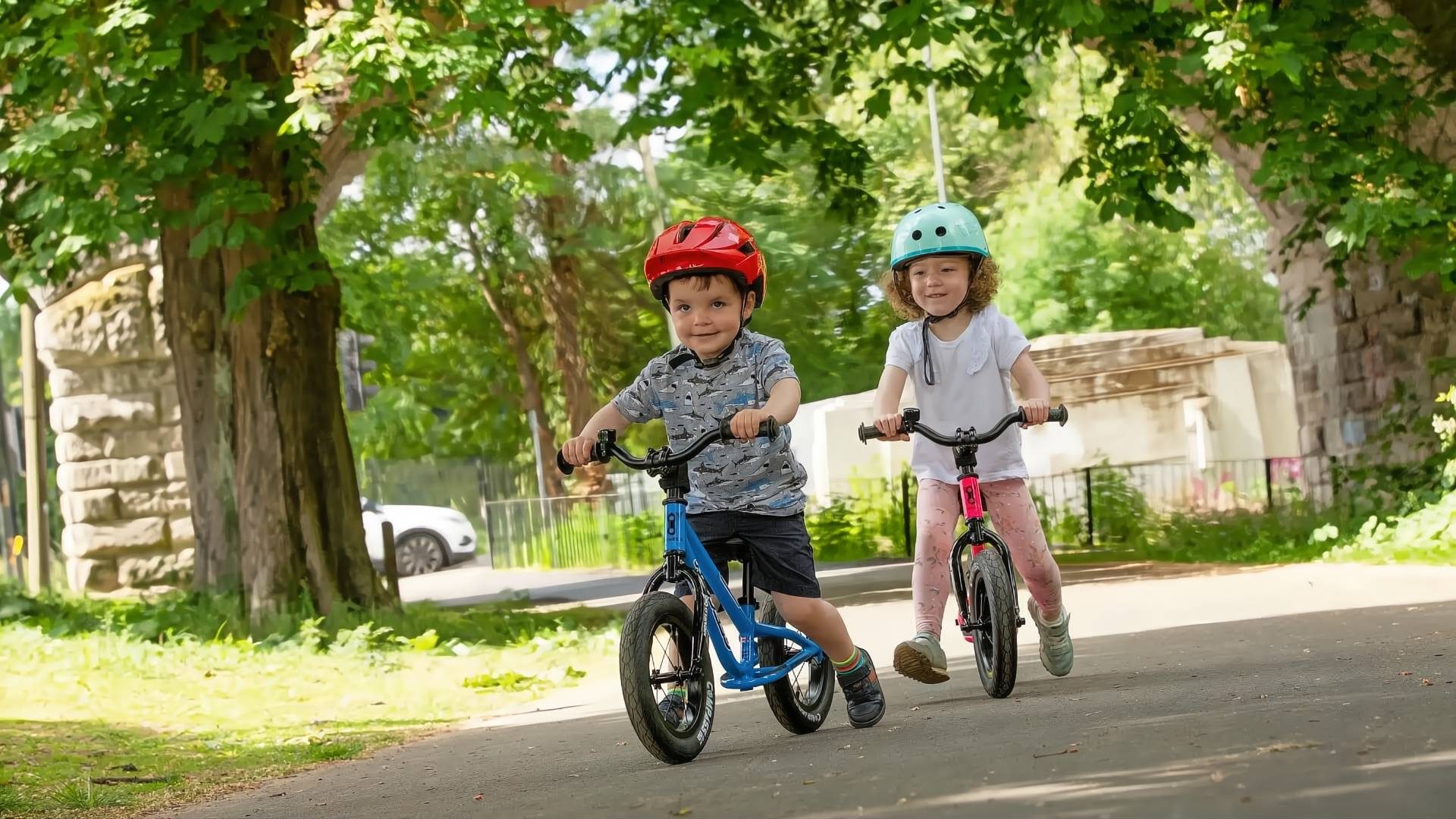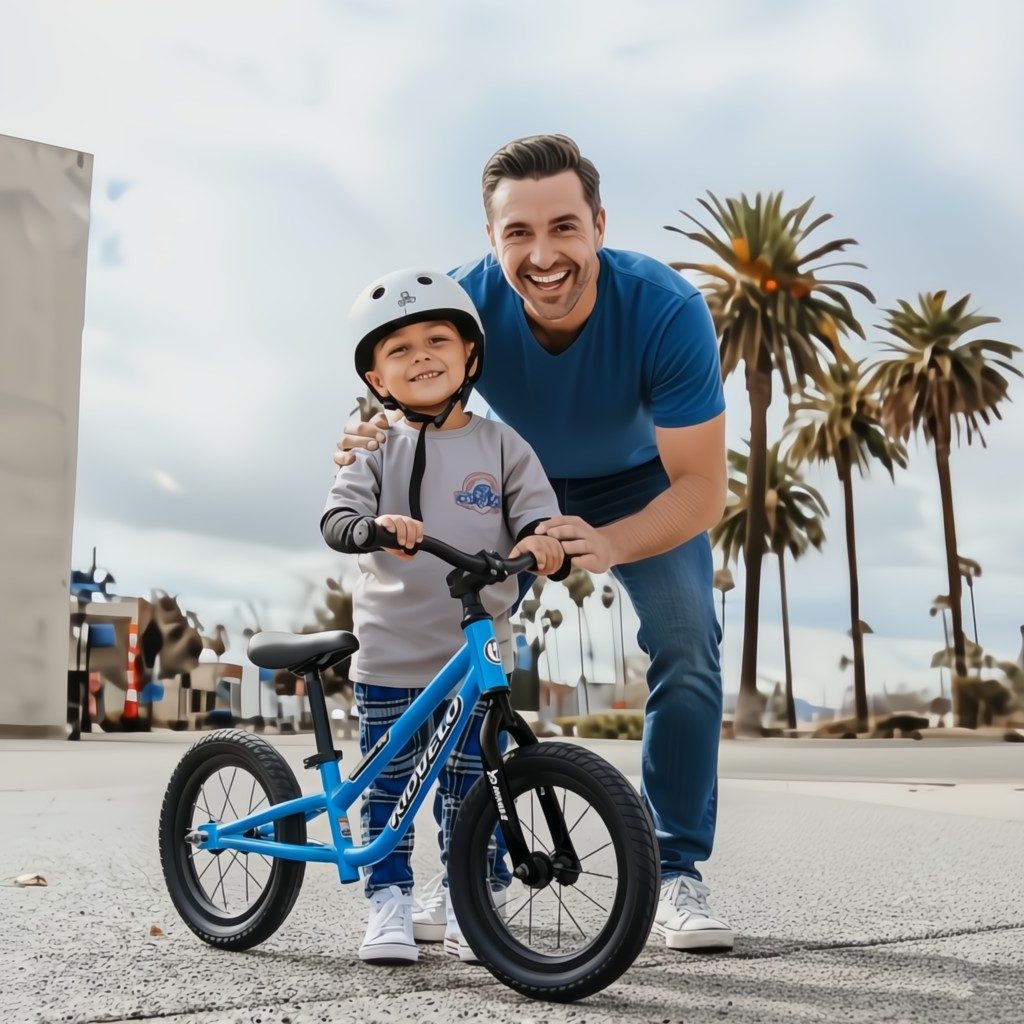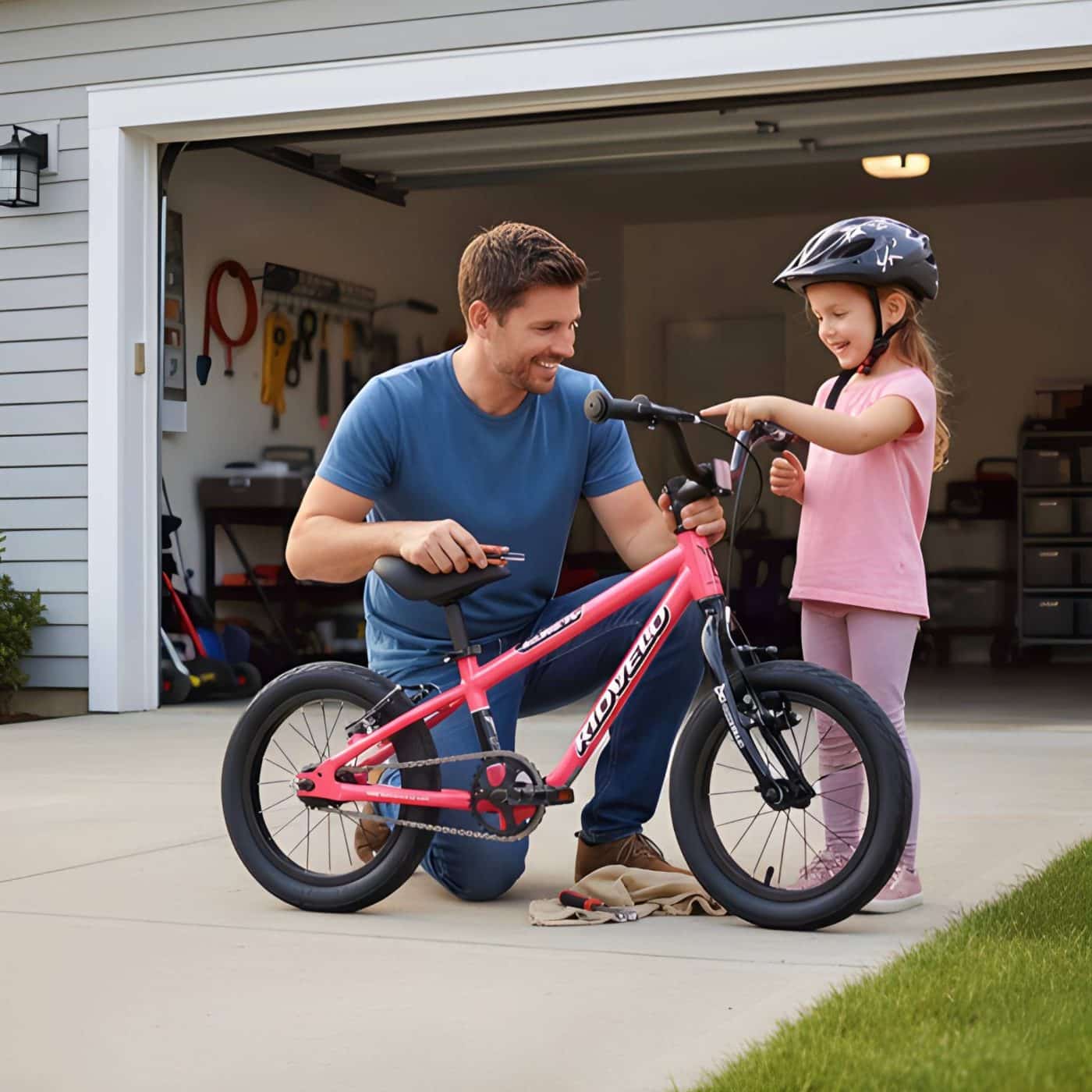
The correct bike seat height for kids depends on riding mode. In balance mode, the seat sits 1–2 cm below your child’s inseam. In pedal mode, set it so the knee has a slight bend at the bottom of the pedal stroke. Getting this right takes under 10 minutes — and it immediately improves control, safety, and confidence.
This guide covers seat height, handlebar position, and brake reach — with a reference table by age and inseam so you can dial in the fit without guessing.
Quick-Reference: Kids Bike Seat Height at a Glance
- Balance mode: Seat 1–2 cm below inseam. Both feet flat on the ground. Soft knee bend.
- Pedal mode: Ball of foot on pedal at 6 o’clock. Knee slightly bent. No hip rocking.
- Handlebars: Shoulders relaxed. Elbows slightly bent. Easy brake reach without stretching.
Kids Bike Seat Height by Age and Inseam
Use your child’s inseam — not age — as the primary guide. Age ranges are approximate. Two children the same age can have very different inseams.
| Age | Inseam | Seat height range |
|---|---|---|
| 18 mths – 4 yrs | 30–44 cm (12–17″) | 30–44 cm (12–17″) |
| 3–6 yrs | 40–57 cm (16–22″) | 40–56 cm (16–22″) |
| 5–8 yrs | 48–68 cm (19–27″) | 48–66 cm (19–26″) |
| 9–13+ yrs | 62–84 cm (24–33″) | 62–82 cm (24–32″) |
What You Need?
- 4 mm or 5 mm Allen key (most kids bikes use one of these two sizes)
- Tape measure or ruler
- A wall or helper to steady the bike
- Optional: torque wrench (use if torque ratings are printed on the parts)
Note : Many kids bikes use quick-release clamps for tool-free seat and handlebar changes. If yours uses bolts, the steps below are the same just use your Allen key instead.
Step 1: Measure Your Child’s leg Inseam (1 minute)
- Have your child stand against a wall, barefoot or in riding shoes.
- Place a book snugly between their legs, level with the floor.
- Measure from the floor to the top edge of the book. That number is the child’s leg inseam.
Pro Tip: Jot it down or save it in your phone for future growth checks.
Got the inseam? Use the size guide to confirm the right frame size before adjusting seat height. → Kids Bike Size Guide
Step 2: Set the Correct Bike Seat Height
A) Balance bike seat height (or balance mode on convertible models)
Target: Set the seat top 1–2 cm below your child’s inseam. Both feet should rest flat on the ground with a slight knee bend.
- Open the seatpost quick-release or loosen the seat clamp bolt.
- Slide the seatpost to the target height.
- Confirm the minimum insertion line is fully hidden inside the frame.
- Align the saddle straight with the frame. Tighten the clamp securely.
Fit check: Your child sits with feet flat on the ground. Knees bend gently. They can push, glide, and stop with confidence.
B) Pedal bike seat height (or pedal mode on convertible models)
Target: Ball of the foot on the pedal at 6 o’clock position. Knee slightly bent. No hip rocking side to side.
- Lean the bike against a wall or hold the handlebar steady.
- Have your child sit on the saddle and place a foot on the pedal at 6 o’clock.
- Adjust the saddle until the leg is almost fully extended — but not locked out.
- Watch for hip rocking as they pedal. If it rocks, lower the saddle 5 mm and recheck.
- Keep the saddle roughly level. A 1–2 degree tilt is fine for comfort.
Beginner tip: New riders can start 1–2 cm lower so they can touch the ground easily. Raise the saddle as confidence grows.
Step 3: Adjust Right Bike Handlebars Raise
Goal: Relaxed shoulders, slightly bent elbows, and comfortable brake reach without stretching forward.
Handlebar height
- Balance mode: Set handlebars level with or slightly above the saddle. This encourages an upright, confident stance.
- Pedal mode: Level with or slightly below the saddle is common. Avoid a hunched back or straight locked arms.
- Keep the minimum insertion line fully inside the clamp at all times.
Handlebar angle (bar roll)
- Loosen the faceplate bolts evenly (usually 4 mm or 5 mm).
- Rotate the bars so grips sit naturally in your child’s hands with a slight backsweep — 10–15 degrees works for most kids.
- Re-tighten bolts evenly. Check any torque rating printed on the stem or handlebar clamp.
Kids bike handlebar types — what to know
Most kids bikes ship with riser bars. These have an upward sweep that suits an upright riding position and helps with steering control for smaller riders. Flat bars are less common on kids bikes — they suit older, more experienced riders who want a lower, more aggressive position. If your child’s bike came with flat bars and they feel stretched out, a riser bar swap is often the fix.
Brake lever reach
- Most kids levers have a reach adjuster screw. Turn clockwise to bring the lever closer for smaller hands.
- Angle levers 15–30 degrees downward so wrists stay neutral when braking.
Safety check: Hold the front wheel between your knees and try to twist the handlebars. Nothing should move. If anything slips, tighten further, follow the torque rating printed on the parts.
Step 4: Final Safety and Fit Checks
- Minimum insertion lines: Must never be visible above any clamp — seatpost or handlebar post.
- Quick-release clamps: Should close firmly with resistance at the halfway point. A light palm imprint when fully closed means correct tension.
- Bolt tightening (no torque rating printed): 5–6 Nm for stems and faceplates. 6–7 Nm for seat clamps. Do not overtighten.
- Alignment: Saddle straight with the frame. Handlebars square to the front wheel.
- Test ride: Listen for creaks. Confirm nothing moves. Check your child looks relaxed and in control.
Pro tip: Put a small strip of tape on the seatpost and handlebar post at your child’s current settings. Re-setting after transport takes seconds.
Note: A poorly set seat height doesn’t just feel uncomfortable, it can cause knee strain and back pain over time. Sports Medicine Australia links repetitive cycling injuries in young riders directly to incorrect bike fit.
Common Bike Seat Height Mistakes to Avoid
1 – Seat too high
Hips rock side to side when pedalling. Causes knee and lower back strain over time. Fix: Lower the saddle 5 mm at a time until rocking stops.
2 – Seat too low
Knees are over-bent at the bottom of the pedal stroke. Pedalling becomes inefficient and tiring. Fix: Raise the saddle until the knee has a slight bend at 6 o’clock — not a full extension.
3 – Handlebars too far forward
Child leans and stretches forward. Shoulders and wrists take the strain. Fix: Raise the handlebars or swap to a shorter stem if the frame allows.
4 – Ignoring growth
Kids grow fast. A seat set correctly in spring can be too low by summer. Recheck every 4–6 weeks during growth spurts.
When to Re-Adjust Seat Height and Handlebars
- Growth spurts: Recheck monthly or any time shoes change significantly.
- Confidence increase: As starts and stops become easy, raise the pedal-mode saddle for better pedalling efficiency.
- Comfort cues: Sore hands or shoulders = bars too low or too far forward. Knees knocking or very bent = saddle is too low.
- After transport: Use your tape mark to reset quickly after removing the seatpost for travel.
![Best Kids Bikes in Australia [Top 12 List 2025]](https://kidsbikesonline.com.au/wp-content/uploads/2025/09/Best-Kids-Bikes-in-Australia-Top-12-List-2025-e1780399011614.jpg)