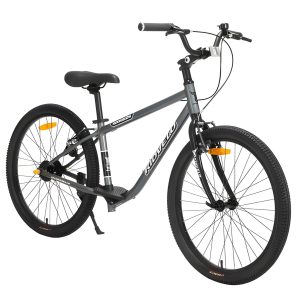
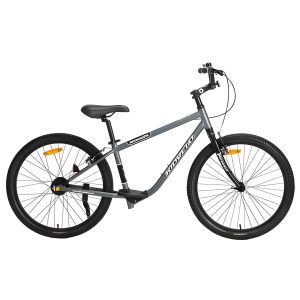
24 inch Bike Ages (9-13+)

A 24 inch bike is the right choice for most Australian kids aged 9 to 13 years. It suits riders standing 130 to 155 cm tall with an inseam between 53 and 66 cm. This wheel size covers everything from school-run bikes to proper trail-ready 24 inch mountain bikes and 24 inch youth mountain bikes built for singletrack and pump tracks. 

Whether you need a 24 inch kids bike for weekend rides, a 24 inch girls bike fitted for your daughter, or a performance 24 inch children’s  bike for a serious young rider,  this collection has it.

Australian-owned and operated · Secure checkout · Fast dispatch · Easy returns ·

Trusted and Loved by Hundreds of Happy Parents and Grandparents!

Showing the single result

Which Wheel Size Fits your Child?

Not sure if your child needs a 24 inch bike? Use this table first.

Wheel SizeAge (guide)Height RangeInseam RangeBest For
16 inch4–6 yrs100–115 cm38–48 cmFirst pedal bikes
20 inch6–9 yrs115–130 cm45–53 cmGrowing confident riders
24 inch9–13 yrs130–155 cm53–66 cmActive tweens, trail riders

Height beats age every time. A tall 8 year old can fit a 24 inch bike. A shorter 12 year old may still ride a 20 inch comfortably. Always measure inseam, not just birthday,  before buying.

Why the 24 inch wheel size is a turning point in kids cycling

The step from 20 inches to 24 inches is the biggest transition in kids cycling. Frame geometry lengthens. Gearing complexity increases. The riding demands shift from playgrounds to real terrain.

A 24 inch mountain bike handles proper singletrack, gravel trails, and pump tracks. Components at this size,  disc brakes, indexed 7-speed shifting, quality front suspension — are often shared with entry-level adult mountain bikes. This is genuine equipment, not a toy with bigger wheels.

What weight should a 24 inch kids bike be?

Frame material matters most here. Aluminum  frames keep a 24 inch kids bike under 10–11 kg. A heavy steel frame in this size class can add 2–3 kg, that is significant when a child is carrying and maneuvering the bike on trails.

Target weights by category:

  • 24 inch kids mountain bike: 9–11 kg (aluminium, front suspension)
  • 24 inch general-purpose bike: 9–10 kg (aluminium, rigid)
  • Budget steel 24 inch bikes: 12–14 kg (avoid for trail riding)

The best 24 inch youth mountain bikes stay under 10 kg. Lighter bikes build confidence faster, especially on technical terrain.

24 inch mountain bike vs 24 inch kids bike, what is the difference?

Not all 24 inch bikes are the same. Here is how the main types compare.

Feature24 inch kids bike (general)24 inch mountain bike
TyresSmooth or semi-slickWide, knobbly (2.1–2.4″)
SuspensionRigid forkFront suspension (50–80 mm travel)
BrakesV-brakes or caliperMechanical disc or hydraulic disc
Gearing1–7 speed7–21 speed indexed
Best terrainPaths, flat trailsSingletrack, gravel, pump tracks
Typical weight9–10 kg10–11 kg

Choose a 24 inch youth mountain bike if your child rides off-road, visits trail parks, or wants to progress to technical terrain. Choose a standard 24 inch kids bike for school, flat paths, and casual weekend rides.

What about a 24 inch girls bike?

A 24 inch girls bike differs from equivalent boys models only in colour and saddle shape. Frame geometry at this wheel size is now converging across gender lines, fit matters far more than labelling. Measure inseam. Check minimum seat height. Ignore the colour marketing. The right bike is the one that fits.

What to look for when buying a Children’s 24 inch bike

Use these six criteria to compare any 24 inch children’s bike before purchasing.

  • Frame material

Aluminium is the correct choice at this wheel size. It weighs under 11 kg and does not rust. Avoid steel frames for trail riding,  the extra weight limits what young riders can do on hills and technical sections.

  • Front suspension (for mountain bikes)

Look for 50–80 mm of suspension travel. Anything less does little on real terrain. Quality forks use preload-adjustable springs, lockout is a bonus but not essential at this age range.

  • Brake type

Mechanical disc brakes are the current standard for 24 inch youth mountain bikes. They work in mud, wet conditions, and on descents. V-brakes are acceptable on general-purpose bikes used on dry paths. Hydraulic disc brakes appear on premium models and offer the lightest lever pull, useful for smaller hands.

  • Gear range

A 7-speed drivetrain handles Australian terrain well at this age. 21-speed setups exist but are unnecessary unless your child rides steep, technical climbs regularly. Indexed shifting (Shimano or equivalent) is non-negotiable — unindexed shifting is hard for kids to manage and falls out of adjustment constantly.

  • Standover height

Measure your child’s inseam and check the bike’s minimum standover height before ordering. The child should stand flatfoot over the top tube with 2–3 cm of clearance. If standover height is listed on the product page, use it. If not, contact us before purchasing.

  • Tyre width and tread

General-purpose 24 inch bikes: 1.75–2.0 inch semi-slick tyres. Mountain bikes: 2.1–2.4 inch knobbly tyres. Wider tyres add grip and absorb trail vibration, but slow the bike on sealed paths. Match tyre type to where your child actually rides.

How big is a 24 inch bike, and will it fit in the car?

A 24 inch bike is considerably larger than anything below it. Here are the physical dimensions you need to know.

  • Overall length: 145–165 cm
  • Saddle height (mid-extension): 65–75 cm
  • Handlebar width: 55–65 cm
  • Wheel diameter: ~61 cm (24 inches)

Can a 24 inch bike fit in a car?

Yes, in most Australian vehicles with the front wheel removed and the rear seat folded flat.

Vehicle typeFit with wheel on?Fit with the wheel off?
Station wagonUsually yesYes
SUV / crossoverSometimesYes
Hatchback (Corolla, i30)NoYes — rear seat folded
Small sedanNoTight — boot only

For regular trail riding, a rear bike rack or roof rack is the practical long-term solution. Fits two bikes easily and eliminates the wheel-off routine.

24 inch bikes, common questions answered

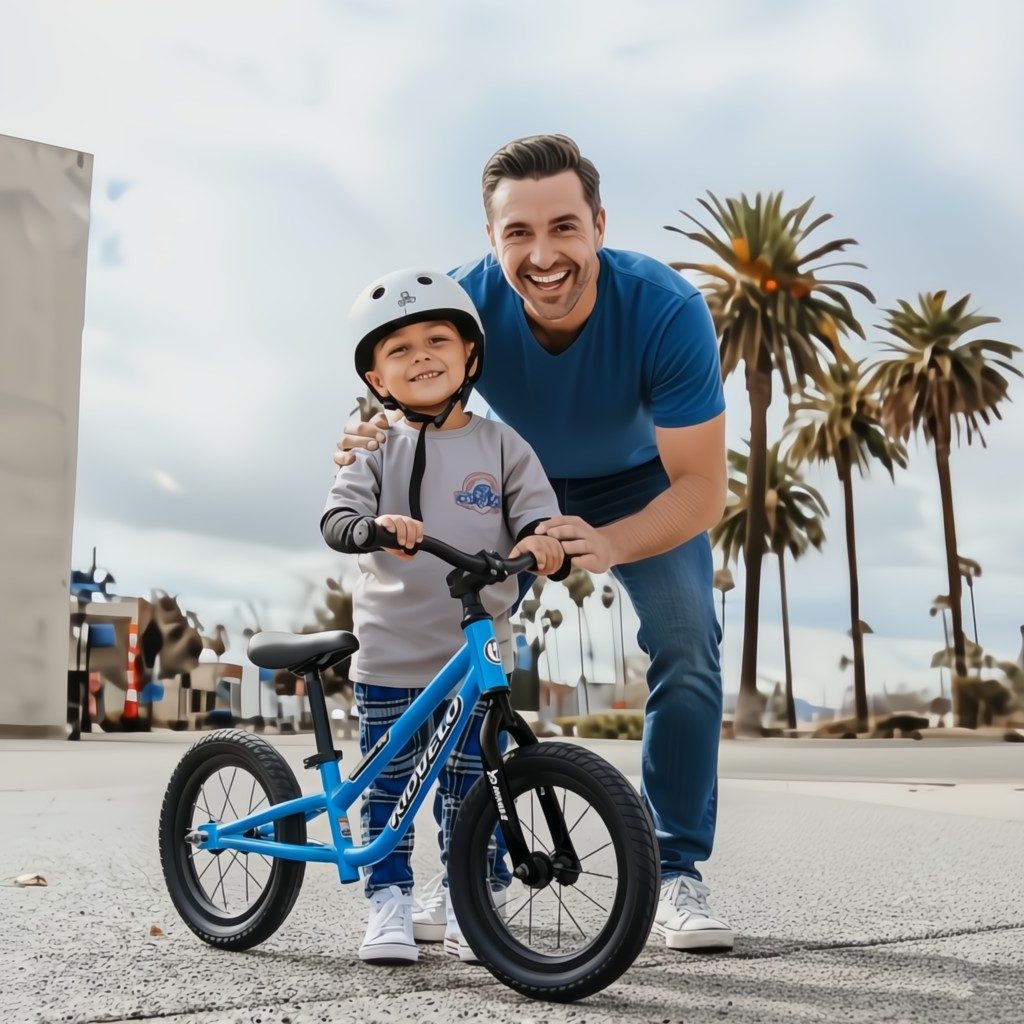
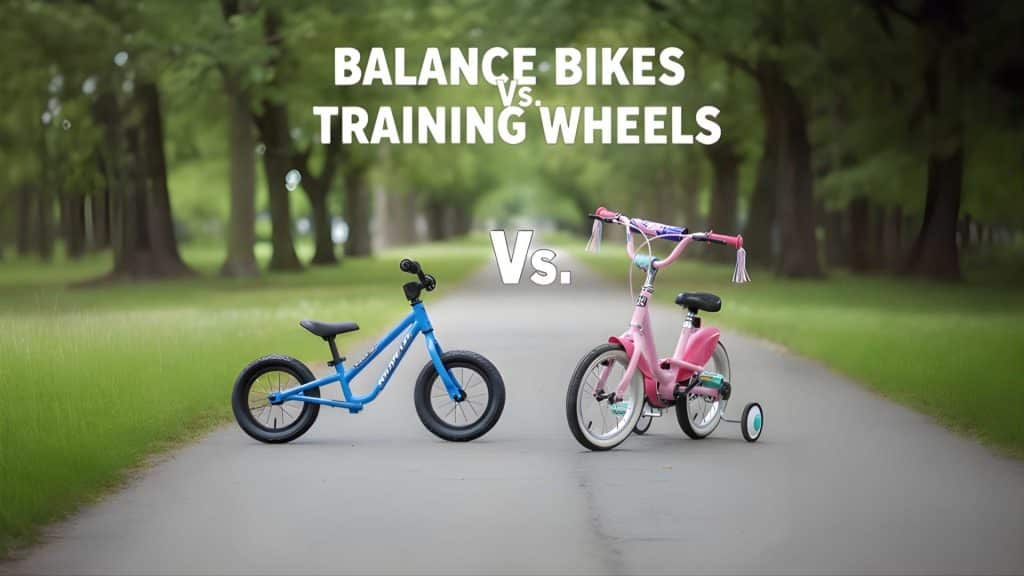
Training wheels are not suitable for a 24 inch bike. They are designed for bikes under 20 inches. A child who needs training wheels at this wheel size should step back to a smaller bike and build balance and confidence first. A balance bike approach works faster than training wheels at any age.

All 24 inch bikes in this collection comply with Australia’s mandatory bicycle safety standard (AS/NZS 1927). View our shipping and delivery policy for lead times on larger bikes. Browse bike accessories for helmets, gloves, and hydration packs suited to active tweens.

Frequently Asked Questions

 A 24 inch bike has wheels approximately 61 cm in diameter. The overall bike is 145–165 cm long. It suits riders aged 9 to 13 standing 130–155 cm tall. It is significantly larger than a 20 inch bike and approaches adult bicycle dimensions.

 A 24 inch bike suits children aged 9 to 13 years. Height of 130–155 cm is the most reliable guide. Tall 8 year olds sometimes fit a 24 inch bike. Some shorter teenagers still ride 24 inch comfortably. Always confirm inseam against the bike's minimum seat height.

A 24 inch bike suits riders standing 130–155 cm tall. Inseam should fall between 53 and 66 cm. If your child's inseam is under 53 cm, a 20 inch bike fits better. If inseam exceeds 66 cm, consider a 26 inch bike.

Yes. Most hatchbacks and SUVs fit a 24 inch bike with the front wheel removed and the rear seat folded flat. Station wagons often fit the bike with the wheel on. For regular trail transport, a rear or roof rack is the most practical option.

No. Training wheels are not suitable for a 24 inch bike. They are designed for much smaller, lighter bikes. A child who needs training wheels at this size should start on a smaller wheel size and develop balance first. A balance bike approach works faster than training wheels at any age.

Why Choose Our Quality Products For Your Child?

Long Lasting – Safety Certified – Perfect Fit – Fun for All Levels – Trusted by Parents

Why Choose Our Quality Products For Your Child?

Frequently Asked Questions of Balance Bikes

What age is appropriate for a balance bike?
The appropriate age for a balance bike is typically between 2 to 8 years old, as children in this age range are usually developing the motor skills needed to ride a balance bike effectively.

Yes, balance bikes are generally considered more effective than training wheels in teaching children how to balance on a bike, making the transition to a pedal bike smoother and quicker.

Most children can learn to ride a balance bike within a few days to a few weeks, depending on their individual abilities and confidence level.
The benefits of balance bikes include improving children’s balance, coordination, and motor skills, as well as fostering a sense of independence and confidence in their riding abilities.
To transition from a balance bike to a pedal bike, encourage your child to practice coasting and balancing without their feet touching the ground, which simulates the feeling of riding a pedal bike.
Yes, balance bikes are safe for toddlers when used under proper supervision and in a suitable environment that is free of potential hazards.
Look for features like adjustable seat and handlebar height, lightweight frame for easy maneuverability, air filled tyres, and a hand brakes for added safety when choosing a balance bike.

While balance bikes are typically designed for outdoor use, they can be used indoors on flat, smooth surfaces with caution to ensure the child’s safety and the protection of indoor surfaces.

To teach a child to use a balance bike, start by demonstrating how to sit and walk with the bike, encouraging them to push off with their feet and gradually progress to coasting and balancing while steering.
The weight limit for balance bikes varies by model, but most can generally support up to around 30kgs to 50kgs, so be sure to check the manufacturer’s specifications for the specific weight limit of the balance bike you choose.

Which Wheel Size Fits your Child?

Not sure if your child needs a 24 inch bike? Use this table first.
Wheel SizeAge (guide)Height RangeInseam RangeBest For
16 inch4–6 yrs100–115 cm38–48 cmFirst pedal bikes
20 inch6–9 yrs115–130 cm45–53 cmGrowing confident riders
24 inch9–13 yrs130–155 cm53–66 cmActive tweens, trail riders
Height beats age every time. A tall 8 year old can fit a 24 inch bike. A shorter 12 year old may still ride a 20 inch comfortably. Always measure inseam, not just birthday,  before buying.

Why the 24 inch wheel size is a turning point in kids cycling

The step from 20 inches to 24 inches is the biggest transition in kids cycling. Frame geometry lengthens. Gearing complexity increases. The riding demands shift from playgrounds to real terrain.A 24 inch mountain bike handles proper singletrack, gravel trails, and pump tracks. Components at this size,  disc brakes, indexed 7-speed shifting, quality front suspension — are often shared with entry-level adult mountain bikes. This is genuine equipment, not a toy with bigger wheels.

What weight should a 24 inch kids bike be?

Frame material matters most here. Aluminum  frames keep a 24 inch kids bike under 10–11 kg. A heavy steel frame in this size class can add 2–3 kg, that is significant when a child is carrying and maneuvering the bike on trails.Target weights by category:
  • 24 inch kids mountain bike: 9–11 kg (aluminium, front suspension)
  • 24 inch general-purpose bike: 9–10 kg (aluminium, rigid)
  • Budget steel 24 inch bikes: 12–14 kg (avoid for trail riding)
The best 24 inch youth mountain bikes stay under 10 kg. Lighter bikes build confidence faster, especially on technical terrain.

24 inch mountain bike vs 24 inch kids bike, what is the difference?

Not all 24 inch bikes are the same. Here is how the main types compare.
Feature24 inch kids bike (general)24 inch mountain bike
TyresSmooth or semi-slickWide, knobbly (2.1–2.4″)
SuspensionRigid forkFront suspension (50–80 mm travel)
BrakesV-brakes or caliperMechanical disc or hydraulic disc
Gearing1–7 speed7–21 speed indexed
Best terrainPaths, flat trailsSingletrack, gravel, pump tracks
Typical weight9–10 kg10–11 kg
Choose a 24 inch youth mountain bike if your child rides off-road, visits trail parks, or wants to progress to technical terrain. Choose a standard 24 inch kids bike for school, flat paths, and casual weekend rides.

What about a 24 inch girls bike?

A 24 inch girls bike differs from equivalent boys models only in colour and saddle shape. Frame geometry at this wheel size is now converging across gender lines, fit matters far more than labelling. Measure inseam. Check minimum seat height. Ignore the colour marketing. The right bike is the one that fits.

What to look for when buying a Children’s 24 inch bike

Use these six criteria to compare any 24 inch children’s bike before purchasing.
  • Frame material

Aluminium is the correct choice at this wheel size. It weighs under 11 kg and does not rust. Avoid steel frames for trail riding,  the extra weight limits what young riders can do on hills and technical sections.
  • Front suspension (for mountain bikes)

Look for 50–80 mm of suspension travel. Anything less does little on real terrain. Quality forks use preload-adjustable springs, lockout is a bonus but not essential at this age range.
  • Brake type

Mechanical disc brakes are the current standard for 24 inch youth mountain bikes. They work in mud, wet conditions, and on descents. V-brakes are acceptable on general-purpose bikes used on dry paths. Hydraulic disc brakes appear on premium models and offer the lightest lever pull, useful for smaller hands.
  • Gear range

A 7-speed drivetrain handles Australian terrain well at this age. 21-speed setups exist but are unnecessary unless your child rides steep, technical climbs regularly. Indexed shifting (Shimano or equivalent) is non-negotiable — unindexed shifting is hard for kids to manage and falls out of adjustment constantly.
  • Standover height

Measure your child’s inseam and check the bike’s minimum standover height before ordering. The child should stand flatfoot over the top tube with 2–3 cm of clearance. If standover height is listed on the product page, use it. If not, contact us before purchasing.
  • Tyre width and tread

General-purpose 24 inch bikes: 1.75–2.0 inch semi-slick tyres. Mountain bikes: 2.1–2.4 inch knobbly tyres. Wider tyres add grip and absorb trail vibration, but slow the bike on sealed paths. Match tyre type to where your child actually rides.

How big is a 24 inch bike, and will it fit in the car?

A 24 inch bike is considerably larger than anything below it. Here are the physical dimensions you need to know.
  • Overall length: 145–165 cm
  • Saddle height (mid-extension): 65–75 cm
  • Handlebar width: 55–65 cm
  • Wheel diameter: ~61 cm (24 inches)

Can a 24 inch bike fit in a car?

Yes, in most Australian vehicles with the front wheel removed and the rear seat folded flat.
Vehicle typeFit with wheel on?Fit with the wheel off?
Station wagonUsually yesYes
SUV / crossoverSometimesYes
Hatchback (Corolla, i30)NoYes — rear seat folded
Small sedanNoTight — boot only
For regular trail riding, a rear bike rack or roof rack is the practical long-term solution. Fits two bikes easily and eliminates the wheel-off routine.

24 inch bikes, common questions answered

Training wheels are not suitable for a 24 inch bike. They are designed for bikes under 20 inches. A child who needs training wheels at this wheel size should step back to a smaller bike and build balance and confidence first. A balance bike approach works faster than training wheels at any age.All 24 inch bikes in this collection comply with Australia’s mandatory bicycle safety standard (AS/NZS 1927). View our shipping and delivery policy for lead times on larger bikes. Browse bike accessories for helmets, gloves, and hydration packs suited to active tweens.
Read More >

Join the Kids Bikes Online Community to get $10 off orders over $99.00aud